EN
EN
 AR
AR
 BG
BG
 CS
CS
 DA
DA
 NL
NL
 FI
FI
 FR
FR
 DE
DE
 EL
EL
 IT
IT
 KO
KO
 NO
NO
 PL
PL
 PT
PT
 RO
RO
 RU
RU
 ES
ES
 SV
SV
 TL
TL
 IW
IW
 ID
ID
 LT
LT
 SR
SR
 SL
SL
 UK
UK
 VI
VI
 ET
ET
 HU
HU
 TH
TH
 TR
TR
 FA
FA
 AF
AF
 MS
MS
 GA
GA
 IS
IS
 HY
HY
 AZ
AZ
 KA
KA

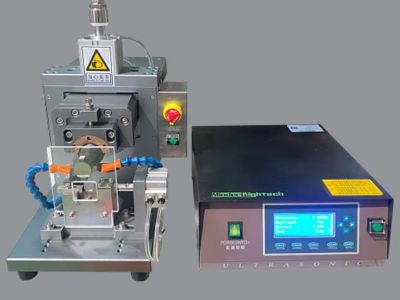
The Mask Aligner is a crucial piece of equipment in many laboratories, where patterns smaller than dust specks are printed on wafers to make electronic parts. Wafers are thin pieces of material, typically silicon, that serve as the foundation for making chips. It is important to know the appropriate wafer thickness a Mask Aligner can accommodate. If the wafer is too fat or skinny, it might not fit into place right or a machine won’t be able to focus light correctly and that can cause problems in the final product. Here at Minder-Hightech, we've seen various wafer thicknesses and it really depends on what tasks you're planning to do and what kind of device is being made.
Wholesale Semiconductor Fabrication – How Thick can the Wafers be for a Mask Aligner?
When it works in the large factories that make semiconductors for many customers, this Mask Aligner must cope with wafers which are normally used to produce dozens, hundreds of semiconductor parts. These wafers are available in standard dimensions, but can vary in thickness. Wafers ranging from about 200 micrometers (0.2 millimeters) to 750 micrometers (0.75 millimeters) thick can be processed on most labs’ Mask Aligners, and this includes Minder-Hightech’s Laboratory use Mask Aligner Contact Mode Series of instruments.
How to choose the perfect wafer thickness for Mask Aligner bulk production?
Sometimes wafers need to be thinned down later on for packaging or performance reasons. Beginning with the thicker cases and thinning out later is standard operating procedure, but that adds an extra step, and therefore cost. At Minder-Hightech, we recommend considering the entire workflow — how wafers get from one piece of equipment to another, for example; how they are washed; or how their patterns are examined. The focal system of the mask aligner photolithography has a thickness limit on how thick the wafer can be before its image becomes blurry. So the thickness has to be within this limit, or the patterns will not be sharp.
Where to purchase a Mask Aligner that can accommodate various wafer thicknesses for wholesalers?
Maskers can easily be found for wafers of various thickness and designed to give the user flexibility in using these machines. Here at Minder-Hightech Mask Aligners are available that can handle wafers from very thin to quite thick. These devices are ideal for laboratories and factories that need to process wafers of varying thicknesses with the same equipment. For wholesale purchasers, buying from the reputable supplier Minder-Hightech ensures that you receive machines that can handle a wide range of wafer types.
What are the typical problems of alignment 3D wafers in a Mask Aligner?
Problems can occur which make it difficult to align thick wafers when working with a Mask Aligner. They weigh more and may not fit certain machines designed for weaker, thinner wafers. Minder-Hightech is familiar with these problems and our Mask Aligners are constructed to be minimized. One such problem is non-uniform contact of the wafer and the mask. These can lead to blurring or ragged edge patterns, which detracts from the quality of the finished article. Another problem is in adjusting the alignment system. Markings on wafer itself might not be easily visible if the wafer is too thick, positioning required with high precision. Furthermore, thicker wafers may subject additional strain to the holders of the machine that hold-down for thinner wafers and can wear down or damage more fast if not carefully handled.
How do I handle wafer thickness variation in Mask Aligner processing?
It requires a good scheduling and cautious Steps with wafers in different thickness. Minder-Hightech offers a few best practices to ensure that labs and factories get the most out of them. First, check the thickness of your wafer before beginning alignment. This will help you to properly set the machine up in order to avoid making mistakes. It is also easier to make thinner (there are many thickness settings) if you use a Mask Aligner, such as devices from Minder-Hightech. The holders and the clamps of the machine are adapted, secondly to receive wafers in one size well. This prevents movement of the wafer for alignment and exposure. Third, wash the wafer and the mask meticulously to eliminate dusts and debris. This is esp important for thicker wafers where particles can make a mask-wafer contact different.
Table of Contents
- Wholesale Semiconductor Fabrication – How Thick can the Wafers be for a Mask Aligner?
- How to choose the perfect wafer thickness for Mask Aligner bulk production?
- Where to purchase a Mask Aligner that can accommodate various wafer thicknesses for wholesalers?
- What are the typical problems of alignment 3D wafers in a Mask Aligner?
- How do I handle wafer thickness variation in Mask Aligner processing?