EN
EN
 AR
AR
 BG
BG
 CS
CS
 DA
DA
 NL
NL
 FI
FI
 FR
FR
 DE
DE
 EL
EL
 IT
IT
 KO
KO
 NO
NO
 PL
PL
 PT
PT
 RO
RO
 RU
RU
 ES
ES
 SV
SV
 TL
TL
 IW
IW
 ID
ID
 LT
LT
 SR
SR
 SL
SL
 UK
UK
 VI
VI
 ET
ET
 HU
HU
 TH
TH
 TR
TR
 FA
FA
 AF
AF
 MS
MS
 GA
GA
 IS
IS
 HY
HY
 AZ
AZ
 KA
KA

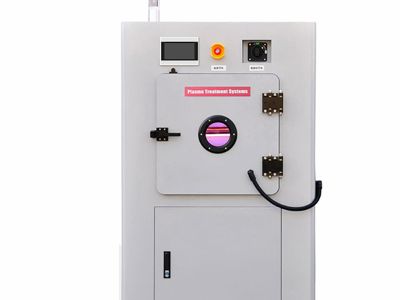
The selection of 13.56 MHz or a 2.45 GHz microwave plasma system, however, may not be so easy to decide upon. We from Minder-Hightech know very well how significant this is decision for your work. Each type of Plasma Treater source has unique advantages and can be employed across a variety of fields, including electronics, materials processing and surface treatment. The frequency you choose affects how the plasma behaves, which in turn impacts its energy efficiency and how it interacts with materials. Well, sometimes people feel that one is just better for everybody and everything else than the other, but it may not be true for you. Let’s see what buyers need to know before making a decision and then compare in detail these two plasma sources.
What Buyers Need to Know?
If you’re in the market to buy a plasma source, it’s not enough to pick one with the highest frequency or latest technology. We at Minder-Hightech want to suggest buyers consider several things. For one, the composition of what you work on matters very much. Certain materials respond more effectively to some Plasma Flame Treater frequencies, thereby changing how clean or smooth the treated surface is. Also at play is the size of the area you’d like to treat. For instance, 13.56 MHz RF plasma might be more desirable to a larger area because it penetrates differently and 2.45 GHz microwave plasma may provide more uniform energy but may be limited in size. Another thing is equipment and maintenance costs. RF plasma systems can sometimes require additional tuning and parts replacement that may fall outside your budget. Microwave plasmas typically operate at lower temperatures, and so can last longer with less maintenance. Still, the microwave systems are likely more complicated to install in the first place. Energy efficiency is the other consideration that buyers need to factor in. Some times microwave plasmas can be more efficient, you have also to consider your process settings, and the gas you are using. Buyers need also to learn about safety regulations as plasma source delivers high energy; Minder-Hightech has been following strict safety guidelines in our products. Lastly, your team’s familiarity with plasma technology may influence your decision. If your operators are familiar with RF systems, it could potentially shorten training time. If not, a microwave system with automatic controls might be simpler. So there’s no right or wrong answer for every company, and being aware of these things can help you pick the best choice for your business.
13.56 MHz RF vs 2.45 GHz Microwave
This is similar to pitting pliers (stereotypically for electricians) against a screwdriver: they are two different tools that have nothing to do with each other, despite both operating using screws. Our team of professionals at Minder-Hightech have worked for many years closely with our clients to find the appropriate plasma source for their applications. The 13.56 MHz RF Plasma surface treatment machine is characterized in its capacity to form a stable plasma facilely controllable at low pressures. It has a habit of making ions and radicals that interact deeply with the surfaces of materials, which is fantastic for cleaning or etching things. It is frequently used in making semiconductors, which require careful control of plasma. In contrast, 2.45 GHz microwave plasma excite electrons of higher energy, leading typically to more electron density and high temperature. This makes it highly useful for applications such as thin film deposition or surface modification, where a more energetic plasma is an advantage. Microwave plasma may also be operated at atmospheric pressures as well for versatility. But it may be more difficulty to control uniformity over large areas than with RF plasma. Another distinction is the equipment structure. Matching networks and sensitively tuned ranges are thus often a necessity for RF systems. Apparatus utilizing microwaves may include waveguides and specialized cavities for retaining energy, which can make the device bulky rather than susceptible to energy leakage. Based on Minder-Hightech’s extensive experience: the 13.56 MHz RF is more popular among those customers who demand high precision / smaller treatment zones. 2.45 GHz microwave plasma is opted by researchers who need fast processing or atmospheric pressure operation. Both options can be adjusted for a range of gases and pressures, although which one you choose will come down to the material you are working with, the speed at which you would like to run your process and your budget. In some cases, it may be possible to use both technologies in a hybrid system, and Minder-Hightech can also help with this. It’s not that one frequency is better, but rather which aligns more closely to your process and goals.
Buyers are going to need Minder-Hightech, who’s there to help you pick. Taking time to learn each plasma source difference makes sure you pick the right tool for your job, saving costly errors and increasing your quality production outcomes.
Where to Purchase Good 13.56MHz and 2.45GHz Plasma Sources for Large Orders?
If you are purchasing plasma sources at a bulk level, it is very crucial that you find where the best place that sells good and reliable products. Plasma sources operate by generating plasma, a form of super-hot gas composed of charged particles, with radio waves or microwaves. The 13.56MHz RF plasma source and 2.45GHz microwave plasma source are two of the most widely used types in various industries. When purchasing in bulk these plasma sources, you want to make sure they perform well and do so for a long time. That’s why the selection of a reputable vendor is critical.
Minder-Hightech is a fine company, they are offering high-quality 13.56MHz and 2.45GHz plasma sources for sale. They know what customers want and make sure their products satisfy high standards. A purchase from Minder-Hightech is a guarantee for tested plasma sources. You can also get pretty good support if you have questions on, or need help with the products. And that can be especially handy when getting a large quantity at one time.
Common problems in selecting 13.56MHz RF and 2.45GHz Microwave plasma sources on a wholesale basis
Deciding whether to get a 13.56MHz RF plasma or a 2.45GHz microwave source is difficult, particularly if you have an order where many sources are needed all at once. All work in different ways and all have their own strengths and weaknesses. Knowing these distinctions can prevent common issues that occur with bulk purchases.
The most common problem is you don’t know which plasma generator suits your project the best. The RF plasma source with 13.56MHz frequency is commonly effective for processes with uniform plasma in larger area. It is frequently employed for cleaning, etching and thin-film deposition. In contrast, the 2.45GHz microwave plasma source can generate highly dense plasma at high speed and is used more for rapid processes or particular chemical reactions. If you choose the incorrect type, your production could be ineffective or the plasma might not have sufficient strength.
The other drawback is the expense and upkeep. Occasionally buyers are looking for little more than the bottom-line figure. But the 13.56MHz RF plasma sources may in some applications require more frequent maintenance due to faster part wear. Microwave plasma sources may be more expensive upfront but are said to be cost-effective in the long run because they require fewer repairs. So overlooking the need to think through the long-term costs can be highly problematic later.